“These songs of mine, they’re like mystery stories, the kind that Shakespeare saw when he was growing up. I think you could trace what I do back that far. They were on the fringes then, and I think they’re on the fringes now. And they sound like they’ve been on the hard ground.”
(Bob Dylan in his Musicare Person of the Year speech in 2016)
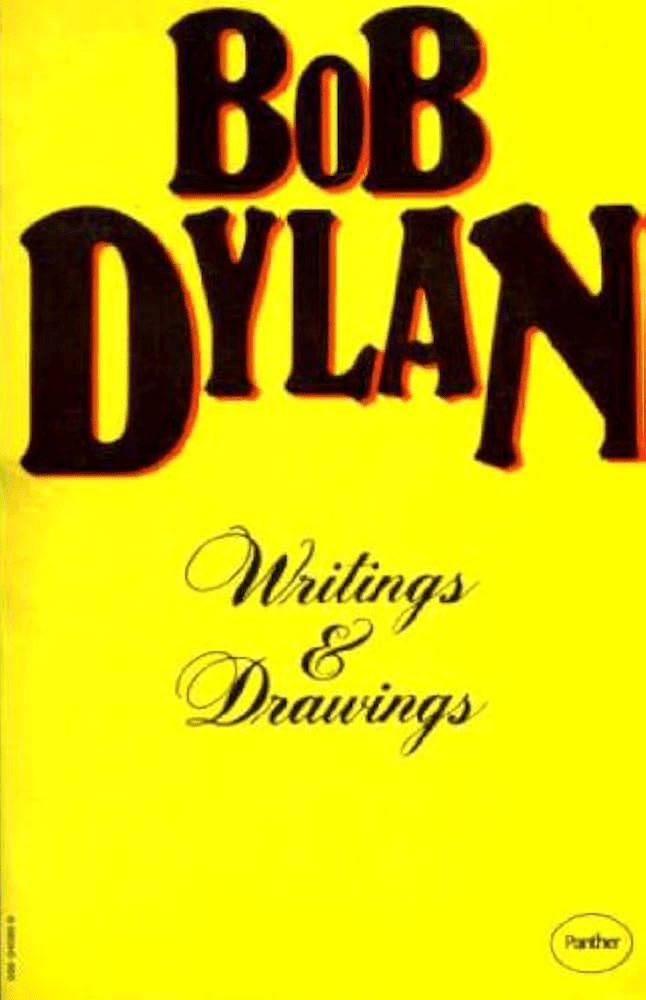
I remember so well the early days of my own lonely search for all things Dylan. I was looking in the libraries, newspapers, music magazines and of course book stores and record shops. Most important, I found a yellow paper back called “Writings & Drawings” where I could dive into the songs, not least all the songs I’ve never even heard of before. It made me realize that I had a long way to go, much to look forward to, if I just could get hold of the albums.
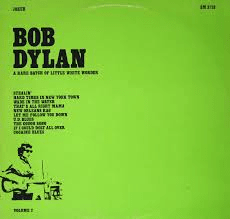
When I moved from up north in Norway to Oslo, the opportunities increased by diving in the whole sea of record shops, the big ones and the small ones. What was so special about the smaller ones, was that I could find some old stuff and some odd stuff, not available in the big, shiny stores. I soon completed my collection of official released albums, some of them from a store of used records. Once in a while I could find a Bob Dylan album I’ve never seen before, a cover I’ve never seen before, some times even song titles I’ve never seen before. Very often it was that eerie sound of the early Dylan, you could hear the room, clinking of glass, people talking or cheering, you could almost hear the smokerings in the room. The sound wasn’t always great, mostly not, but for me it was like finding small treasures with their own kind of mystery attached to those findings, often with little information enclosed. It was the years of treasure hunting. Some of the songs has now found its way to the new release.
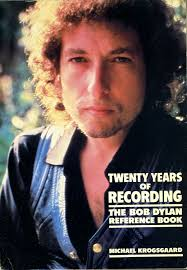
I bought the books I could find, and one day I stumbled into Michael Krogsgaard’s “Twenty Years of Recording – The Bob Dylan Reference Book”. Wow! Most of all it made me understand the volumes of all of the music I haven’t heard, not even heard about, both studio and live. Many a dark night I was flipping through the book. I loved it dearly, but I soon realized that this was stuff I would never get to see or hear. Little did I know. I looked in the book as I listened to the box first time, impressed by the details Krogsgaard already had collected at the time. Some of the songs I first read about in this book, now are officially released for the first time. There was more to come, of course. More details and more songs, but Michael nevertheless did a wonderful job.
This was of course pre-internet times, pre-Biograph and pre-Bootleg Series, even before I found good friends who generously shared their knowledge and collections with me. I’m forever grateful to them. A door was opened to a whole world of music that so far had been unaccessible. We even called John Bauldie’s telephone answering machine to get news about tour programme and setlists, another fabulous step for me. Updates on a daily basis. Wow!
The possibility of sometimes holding a beautiful and carefully curated box like “Through The Open Window” in our hands was, we thought, of course just wishful thinking. Then “Biograph” arrived in 1985 and invited us all into the archives. Then came “Bootleg Series 1-3 – Rare and unreleased” in 1991 and even new doors opened. Some years later we suddenly had it all at our fingertips at the internet, the information, the music, even lots of the not officially released music was suddenly available or possible to find. The flow of information became partly a blessing, partly a curse, the one of “Too much information about nothing, too much educated rap.” We got it all, but that might also be the only thing we got.
But, then again – when it comes to Bob Dylan’s “Bootleg Series” – it’s been a pure blessing, and still is. Obvious for me, but of course for all interested in this music and in this unique artist and the enormous weight of his exceptional production. There are still some gems at my wishing list, for sure, but for each set I’m just grateful for the great job done, box set by box set. In this own peculiar way, I always hope for more.
With the film “A Complete Unknown” from last winter, we were taken back to the winter of 1961 and Bob Dylan’s encounter with Woody Guthrie, New York and Greenwich Village, and the artist’s rapid development from his arrival in NY up until his dramatic and electric farewell to the folk movement at Newport in 1965. With the eighteenth volume in Bob Dylan’s “Bootleg Series”, “Through The Open Window”, we are first taken a few steps further back in time, whilst the deep dive into Dylan’s early period is more thorough than in previous releases in the series. The box set stops almost two years earlier than the film, but it is only natural to view the box as a complementary companion to parts of the story told in the film.
The box contains 8 CDs, nine hours and 138 songs, as well as a series of shorter and longer introductions of Dylan and/or of the songs. All in all, we are presented with an overwhelming account of the singer and songwriter’s development in the period from when he was fifteen until he was well on his way to twenty-three – it all starts with a brief and curious excerpt from the school band “The Jokers” and their concert at Christmas Eve 1956, featuring a cheerful Dylan leading “Let The Good Times Roll” (in poor sound quality), through to a fabulous and complete concert at Carnegie Hall in October 1963, where the now uncrowned crown prince of folk truly blossoms, both as a songwriter and a performer. This is the first time the entire concert has been officially released, making it one of the great highlights of the set. A wonderful experience and an interesting link to the historic “Halloween concert” a year later (Bootleg Series, volume 6). Eleven of the nineteen songs had since then been replaced, a clear indication of the still rapid pace of his songwriting, both thematically and in scope. The road to the Nobel Prize was already well underway.
Some of the songs have been released previously, but with this box set as a framework, they are all placed in both an artistic and historical context which both strengthens the release and highlights the individual tracks. Is it a complete documentation of the period? Of course not, but in my opinion the selection are executed with great skills. One example is the inclusion of Dylan’s deeply touching, original and blue version of Guthrie’s “This Land Is Your Land” from November 1961, earlier released on the soundtrack for “No Direction Home” (2007). Here it comes home. The version and the sad gravitas in the performance speaks right into the current situation in the same land. “Come back, Woody Guthrie”, as Steve Earle put it in an earlier stage of the republic.
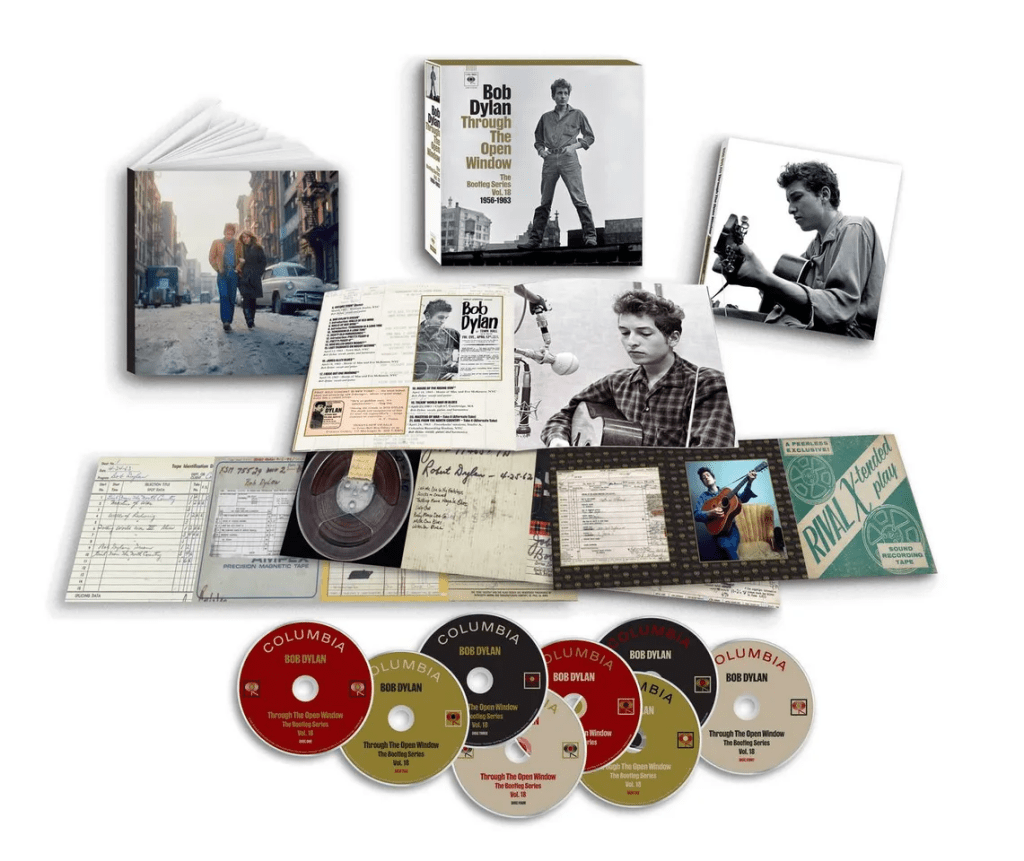
The producers of this box are producer Steve Berkowitz and historian and author Sean Wilentz. Berkowitz has been successfully involved in almost all of Dylan’s archival releases from Bootleg Series 1-3 in 1991 up until today, in close collaboration with Dylan’s manager, Jeff Rosen, while this time the reins have been handed to Wilentz, the same person who wrote the extensive and beautifully illustrated essay included as a hardcover book in this box set. Wilentz has also written liner notes for previous releases, but really reached a wider Dylan-interested audience with his book “Bob Dylan in America”, published in 2010, where he based his approach precisely on the period we are also discussing here. The combination of professor of American history and a passionate interest in Dylan’s life and art has made him the ideal editor for the selection of songs that this box contains.
The selection is chronological according to the time of recording, whether in the studio or live, but it is clearly concerned with documenting the depth and breadth in both performances, lyrics and themes, in sources of inspiration and genres touched upon, where the criteria as a whole also strongly reinforce the connection between American history and this particular artist’s development, in both directions. In the same way, Wilentz has taken care of including significant milestones in Dylan’s own story – such as his studio debut when Carolyn Hester needed a harmonica player in September 1961 (here represented with “I’ll Fly Away”), produced by John Hammond, who after this first meeting quickly signed Dylan and soon began producing Dylan’s debut album. Harry Belafonte needed a harmonica player for the folk song “Midnight Special” in February 1962, and in March followed recordings with blues diva Victoria Spivey (It’s Dangerous) and delta blues artist Big Joe Williams (Wichita) . All of this is present in this set, along with songs where Dylan sings with friends and companions as Tony Glover, Danny Kalb, Jim Kweskin and Dave Van Ronk – some of the artists that easily could have made it to a film twice as long as the one we got, the great “A Complete Unknown” (Yes, we got a glimpse of Dave Van Ronk!). Tracks from Dylan’s historic appearances at the Newport Folk Festival in 1963 are likewise included, both alone or duetting with Joan Baez (With God On Our Side) or Pete Seeger (Playboys and Playgirls), as is his participation at the same microphone that Martin Luther King Jr used at the “March on Washington” in August that same year. One of the songs was “When The Ship Comes In” with Joan Baez, essentially a song about justice prevailing one day and the Goliaths of our time being defeated.
Although the box set embraces only Dylan’s earliest phase, it also encompasses a broad spectrum of genres and sources of inspiration. While he rocks on the first track, he croons doo-wop style on the next, “I Got A New Girl”, before both Guthrie songs, folk, blues and country follow on CD 1. The fantastic British 17th-century ballads “Young But Daily Growing” (a beautiful live version) and “House Carpenter” (a great studio version) are nicely mixed with recordings of other songs for the debut album on CD 2. On CDs 3 and 4 the focus is steered towards what would eventually become the iconic album “Freewheelin’” (1963), also featuring fine songs that did not make the cut, as one song by Dylan’s first idol, Hank Williams, a great version of “(I Heard That) Lonesome Whistle”. Pausing from the studio sessions, Dylan plays at the Gaslight café, giving us another highlight of this set, a beautiful rendition of the ancient ballad “Barbara Allen”. On CD 4 we also can find a lovely early version of “Tomorrow is a Long Time”, with a touching introduction about the background of the song, the intense longing for a girlfriend who has been away travelling in Europe for a long time. After the intro came, at least for me, entirely new and slightly unfinished opening verses before the more familiar closing verse. In the studio at the “Freewheelin'” sessions, he delivers a rousing rocking version of “That’s All Right, Mama”, the song that catapulted Elvis Presley to great heights, here followed by Dylan’s own “Mixed-Up Confusion”, equally rocking. Electric Dylan before he went electric! Great stuff, but both have little in common with what actually ended up being released on the album. A genre saved for later. Speaking of Elvis – when Dylan was asked several decades later about his favourite cover of his own songs, he expressed how much it meant to him when Elvis released the aforementioned “Tomorrow Is A Long Time”, which we can find in Dylan’s well-known live version from Town Hall on CD 5, where we also find alternative versions of both “Masters of War” and “Girl From The North Country”. On CD 6, he is fully engaged in recording the next album, “The Times They Are A-changin’” (released in February 1964), including what Dylan himself one time described as the only ballad he has written, “Boots of Spanish Leather”, yet another song about deep longing and sorrow, on an album which in many ways must be considered his most political, where social criticism is also at its sharpest. Thus we are richly provided with both live and studio versions from this side of his early production, not least at the concluding concert. In “Talkin’ John Birch Society Blues” he mocks the extremely anti-communist organisation’s paranoia, where even the postman in red is mistaken for a communist; in “Only A Pawn In Their Game” he uses his poetic-sociological eye on racism; in “Masters of War” the aforementioned get their comeuppance; and in “With God On Our Side” Dylan uses his gifts to explain his perspective on the tendency of brutal rulers to justify their misdeeds by invoking God. The concert concludes with the aforementioned “When The Ship Comes In” and a hope that in a couple of thousand years we might say: Do you remember when Goliath II was defeated?
When listening to “Through The Open Window”, it is hard not to be struck by the timeless relevance and strength much of the material still has, whether in poetic beauty or in its depiction of societal challenges, even in, or maybe because of, those fairly simple and naked arrangements. Equally striking is the young singer’s conscious and mature approach to using his voice as a tool and means to give both performance and lyrics depth and weight, through what he himself one time spoke of as the most important thing for a singer: “Timing and phrasing. That’s what it’s about.” In his Musicare speech in 2016 Dylan also quoted Sam Cooke as saying: “Voices ought not to be measured by how pretty they are. Instead they matter only if they convince you that they are telling the truth,” and advices us all to think about that next time we listen to a song. Hear, hear. Make up your own mind when listening to this box set.
Johnny Borgan
 Johnny B.
Well written!
LikeLiked by 1 person
Thanks!
LikeLike
Thank you for your insightful comments. We really are so blessed with The Bootleg Series. When Krogsgaard published his results of Dylan’s studio outtakes and alternates in The Telegraph in 1995, the potential for vault releases seemed both possible and beyond our wildest imagination. It is a shame John Bauldie wasn’t here to experience this. I think he would have really loved this particular volume. Here is hoping for additional volumes covering the majestic “Oh Mercy,” “the Rundown Years of 1978-1980, a set focused on all the old blues covers that led to the Supper Club/World Gone Wrong and Bromberg Sessions from the early 1990’s, a continuation of Tell Tale Signs covering the last 25 years including the stunning Rough and Rowdy Ways. Long live The Bootleg Series!
LikeLiked by 1 person
Thanks, Tim – support to your wish list!!! Johnny
LikeLike
Pingback: “I’m The Enemy of Treason, The Enemy of Strife” – Bob Dylan, Paris, 31st of October 2025 | Johnny B.
Hi Johnny, great review. I’m particularly looking forward to listening to the complete Carnegie Hall gig. You’ve whetted the appetite for making sure my wife makes this my Christmas present!
LikeLiked by 1 person
Cool, Mark!!
LikeLike
Pingback: Another Year Gone By, and Bob Dylan is still out there, singing for us, at his own expence. About Bob Dylan in 2025. | Johnny B.